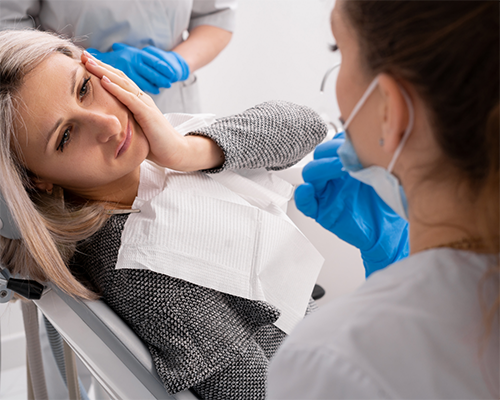
If you’re experiencing severe mouth pain and/or have badly injured one or more teeth, the 21st Century Dental of Irving team will see you right away. After all, the last thing you need in a dire situation like this is to be told that your dentist can’t fit you in for another week! Here in Irving, our office environment is ideal for emergency cases – comfortable, attentive, and free of any unfair judgment. We simply want to help you regain a healthy, pain-free smile in record time. You don’t have to wait – contact our emergency dentist in Irving today!
Why Choose 21st Century Dental of Irving for Emergency Dentistry?
Open Early at 7 AM, Monday through Friday
Same-Day Emergency Appointments Available
Team of Highly-Trained Dentists in One Location
What to Do In a Dental Emergency
We understand that dental emergencies can be a very frightening experience – that’s precisely why our team devotes plenty of time to these patients in order to help them feel genuinely safe and at ease in our Irving dental practice. 21st Century Dental of Irving features a comprehensive variety of advanced restorative services, an exceptionally knowledgeable team of dentists and staff, the latest in oral healthcare technology, and next-level amenities that will all be available to you during your urgent appointment. Rest assured that you will be in very good hands throughout the recovery process.
If you or a loved one experiences a dental emergency, follow these steps:
Step 1: Call us right away. At 21st Century Dental of Irving, we offer same-day emergency appointments. If we are unable to see you immediately, rest assured that our team will evaluate the situation based on the information you provide and walk you through the steps to care for your emergency at home until we can see you in our office.
Step 2: See us for an emergency exam. When you arrive for your appointment, your Irving emergency dentist will see you right away. Our first priority will be to stabilize your condition and get you out of any severe pain. Then, we’ll evaluate your situation and review your treatment options with you, including their estimated price. We’ll work with you to put together a treatment plan that works best for you.
Step 3:Get the dental care you need, fast! As soon as you’ve agreed to a treatment plan, our experienced team will get to work right away! We offer a variety of services right here in-office, and we will always focus on your health and comfort as we repair your smile.
The Most Common Dental Emergencies
So what exactly counts as a dental emergency? Many patients aren’t sure when they call our practice. Below, we’ve compiled a list of the most common emergency situations that our team handles. If you fit into any of these categories, don’t wait to schedule an emergency appointment. Your smile needs help now. However, even if you are unsure if your situation needs urgent dental care, we encourage you to give us a call anyway! We are happy to help you assess your situation over the phone and walk you through the next steps for managing your situation.
Is my toothache a dental emergency? There is a list a mile long of all the things that can cause a toothache. Many are caused by minor issues like enamel erosion or a cavity. However, teeth can develop a lot of pain or sensitivity if an infection has reached the inner dental pulp, which is where the delicate nerve of a tooth is located. These cases need immediate treatment. Call us immediately if your toothache is severe, lasts longer than a day, or is accompanied by a bump on the gums, swelling, or a fever.
How you should handle a toothache: For persistent pain, start by cleaning around the tooth to remove anything that might be stuck between the teeth. If this doesn’t help, or if you are experiencing “jabbing” pain, apply a cold compress to the face and take an OTC medication for temporary relief. You should also rinse your mouth out with saltwater to clear away any bacteria and bring down swelling.
How we treat toothaches: We won’t know how to best treat your toothache until we’ve seen you for evaluation. Some toothaches can be treated with solutions like a filling or gum disease therapy. If you have a sharp, throbbing pain, it is possible that an infection has invaded the pulp inside your tooth. In these situations, you may need root canal therapy or a tooth extraction.
Is a chipped tooth a dental emergency? Even though a chipped tooth may not cause any pain, it should be treated like an emergency. Chipped teeth cannot heal themselves, so the longer one goes untreated, the higher the risk of further damage. We will either want to see you for a same-day appointment or within the next few days to repair the chipped tooth.
How you should handle a chipped tooth: Gently rinse your mouth with warm water and try to find any large pieces of the tooth that you can. Put them in a safe container until we can see you. If the remaining tooth has a rough edge, it can be covered with either some sugar-free gum or dental wax. If possible, avoid eating or chewing on that side of your mouth, and avoid hard or sticky foods.
How we treat chipped teeth: If a large portion of your tooth has broken off, we may be able to bond it back into place with cosmetic bonding. Alternatively, we may just use the cosmetic bonding to fill in the damaged area, which will make it look like the damage never occurred in the first place. If you’ve chipped a highly visible front tooth, we may recommend getting one or more veneers for optimal aesthetics.
Is a cracked tooth a dental emergency? Cracked teeth are often alarming and can cause a lot of discomfort. Even if the damage is minor, you should call us right away. A broken or cracked tooth will not heal itself and will need to be repaired professionally to prevent further damage or an infection.
How you should handle a cracked tooth: Gently rinse your mouth with warm water. Apply a cold compress to the face in 10-minute intervals to reduce any swelling, and be sure to avoid eating or chewing with that side of your mouth until we can treat you.
How we treat cracked teeth: Superficial damage can often be fixed with cosmetic bonding, while a severely broken tooth may need to be extracted. However, the most common treatment for a cracked tooth is a custom-made dental crown, which will hold the tooth together to restore its function and prevent future complications.
Are very sensitive teeth a dental emergency? Tooth sensitivity is a common symptom that can stem from a variety of issues, including everything from eroding enamel to teeth that are simply more sensitive. However, if you notice unusual symptoms, like bleeding or receding gums, pain while biting down, or severe sensitivity that lasts longer than 30 seconds, then it could be a result of an infection. To avoid permanent oral damage, make sure to visit our office as soon as possible.
How you should handle sensitive teeth: Rinse your mouth out with water regularly to keep the area clean. If possible, avoid spicy, sweet, carbonated, and acidic foods and drinks that trigger tooth sensitivity. If needed, you can take an over-the-counter pain reliever to minimize discomfort.
How we treat tooth sensitivity: We have a variety of tooth sensitivity treatments depending on the root cause. Some patients may only need a tooth-colored filling, a fluoride treatment, or a nightguard for bruxism. However, serious cases may warrant gum disease therapy, antibiotic therapy, root canal therapy, or a tooth extraction.
Is a knocked-out tooth a dental emergency? A knocked-out tooth can sometimes be saved and put back into place, but only with quick action. You need to take the proper steps to keep the tooth viable and reach our office within 30-60 minutes for the best chances of successful reimplantation.
How you should handle a knocked-out tooth: Try to find your tooth if possible, pick it up only by the crown. Gently and briefly rinse it off with water, and do not use soaps, cleaners, or disinfectants. Don’t scrub away any tissue. See if you can place the tooth back into its socket, and if you can’t, put it between your gums and cheeks or into a container of milk or saliva. It’s essential that the tooth stays wet until we can see you.
How we treat knocked-out teeth: If the tooth is still in good condition by the time you reach our office, we’ll do everything we can to reseat it in its socket. From there, we’ll secure it in place by binding it to the surrounding teeth, which will hold it steady as it heals back into place over the coming months. However, if the tooth cannot be saved, we’ll need to discuss your tooth replacement options, such as a dental bridge, partial denture, or dental implant.
Is a lost filling or crown a dental emergency? While alarming, a lost dental filling or crown shouldn’t cause you to panic. We will try to see you as quickly as possible, but you likely won’t need a same-day appointment. An unprotected tooth will probably feel very sensitive, but even if it’s not bothering you, you should see us right away for treatment.
How you should handle a lost filling or crown: Although there are many repair kits available over the counter, you should never try to fix a lost restoration or filling on your own. If you try to bond it back in place, bacteria can become trapped under it, leading to severe infection. Instead, keep the tooth clean by rinsing with water regularly and avoid placing pressure on it until after it has been repaired. If you are experiencing discomfort, over-the-counter pain relievers can be used.
How we treat lost fillings or crowns: First, we’ll inspect your tooth to determine why your restoration fell out in the first place and see if you need any preliminary treatments for an underlying issue. For a lost filling, we will just replace it with another one. Sometimes a lost dental crown can be repaired, but a new one is often needed to ensure it stays firmly in place.
Is a broken denture a dental emergency? Modern dentures are much more durable and reliable than they were in the past, but it is still possible for them to become damaged. If you have a broken denture, this should be treated as an emergency, so give us a call to schedule an urgent visit.
How to handle a broken denture: You shouldn’t continue to wear a broken denture. This is because you could make it worse or accidentally injure your mouth. Instead, keep it in a glass or container of soaking solution. Bring your denture with you to your appointment, and don’t try to repair it yourself at home. Using products like superglue can make you sick, as they aren’t meant to be used in the mouth.
How we treat broken dentures: If your denture has a small chip or crack in the base or on one of the replacement teeth, dental bonding may be able to help. We may also be able to realign or readjust warped dentures. However, if your restoration is severely damaged, we will likely need to fit you with a new one, or you could opt for a longer-lasting option, like dental implants.
Are loose permanent teeth a dental emergency? Permanent teeth shouldn’t ever feel loose. However, it can happen after a blow to the face due to an accident or injury, as a result of gum disease, or thanks to another serious dental problem. No matter what the issue is, you should treat it as a dental emergency. When a tooth is in danger of falling out, you should seek attention as soon as possible.
How you should handle a loose permanent tooth: If your tooth has been dislodged or shoved out of place, don’t touch it. Give us a call immediately. Avoid eating or chewing on that side of your mouth. Take over-the-counter pain relievers as directed and/or use a cold compress to manage discomfort until you can see us.
How we treat loose permanent teeth: Sometimes, it’s possible to stabilize the tooth back in place by securing it to a healthy neighboring tooth. If your tooth is loose due to advanced gum disease, the infection will need to be eliminated so your tooth can have a solid foundation. We will do everything we can to save your tooth, but sometimes extractions are required. If your tooth must be extracted, we can talk about tooth replacement options, like dental implants.
Is an injury to the gums, lips, or tongue a dental emergency? It can be easy to accidentally injure your gums, lips, or tongue – especially if you are involved with contact sports. This injury can usually be treated easily at home. However, if you are concerned or think that your teeth may have been damaged, give us a call so we can help.
How you should handle an injury to the gums, lips, or tongue: Injuries to soft tissues of the mouth tend to heal quickly, but you should still take steps to keep the situation under control. After the dental injury occurs, clean the wound with a damp cloth or by rinsing your mouth with water. Apply pressure, and the bleeding should subside. Pain can be alleviated with over-the-counter pain medication and a cold compress.
How we treat injuries to the gums, lips, or tongue: If needed, we can take steps to keep the area clean and stitch the wound shut. If you are unable to control the bleeding after the injury, go to your local emergency room.
Is jaw pain a dental emergency? TMJ dysfunction can have a variety of symptoms, including intense head and neck pain as well as lockjaw. This condition occurs when the jaw joints are sustaining too much tension or force, therefore becoming strained. Routine jaw pain isn’t usually an urgent dental emergency, but you should still schedule an appointment with us when you can so we can keep the issue from becoming worse.
How you should handle jaw pain: An uneven bite, teeth grinding, impacted wisdom teeth, and TMJ dysfunction can all cause jaw pain. Until you can see us for an appointment, avoid chewing too much and stick to a soft diet. Discomfort can be managed with over-the-counter pain relievers. If you think that you may have dislocated or broken your jaw, head to the emergency room.
How we treat jaw pain: The first thing that we will do is try to determine where the pain is originating from. After this, we will create a custom treatment plan to address the underlying issue. This could include wisdom tooth extractions, a custom nightguard for bruxism, or TMJ therapy.
If you have food or another object stuck between the teeth, it can cause a lot of discomfort. Fortunately, this can usually be resolved at home without going to the dental office. First, rinse your mouth with water to try to dislodge or soften the object. Next, try to carefully floss around the foreign body. Don’t use anything sharp, like a toothpick. You could accidentally hurt yourself or push the object in further. If you are still struggling, give us a call so we can help.
Understanding the Cost of Emergency Dentistry
How much is it going to cost to fix your smile? That question may not even enter your mind until you’re already in our office being examined by our emergency dentist near Irving, but sooner or later, you’ll find yourself wondering about the financial impact of your dental emergency. We’ll answer any questions you have about the costs related to your treatment, and we’ll work alongside your insurance company to help you save as much money as possible on your care.
Aside from the natural differences that can come up as a result of the location of the practice (since the cost of living tends to influence how much dentists charge for their services), there are a number of factors we’ll have to take into account before we can determine the price of your care. Different emergencies require different restorative services, and naturally, the costs for our different treatments will vary quite a bit. Plus, additional factors need to be considered, like your available dental insurance benefits.
Does Dental Insurance Cover Dental Emergencies?
We understand that dental insurance is a very important investment that you’ve made for yourself and your loved ones, and the well-being of all your smiles. That said, our office is happy to work with you to make sure you’re making the most of your coverage. If you ever have any questions about what’s covered or need assistance filing a claim, just let our knowledgeable team know!
Other Options for Making Dental Emergencies Affordable
Uninsured? Don’t worry, in cases where you are unable to comfortably meet the entire cost of your care upfront, there is another solution: flexible financing. With third-party financing from CareCredit or Cherry, you can choose a payment plan that best suits your budget. Not only does this help make your treatment more affordable, but there is the added benefit that there is often little to no interest attached! If you want to learn more about this financial solution, then get in touch!
Taking Care of Your Smile Can Save You Money
When discussing the cost of emergency dentistry in Irving, it’s important to note the role of preventive care. Habits like brushing twice a day, flossing daily, and visiting your dentist every six months go a long way in preventing cavities, gum disease, fractured teeth, loose restorations, and the like. To keep your oral health in pristine condition, you should also steer clear of unhealthy dental habits, like smoking, chewing on ice, and nail-biting. Alone, these measures may seem small, but combined, they can play a large role in protecting both your smile and your wallet.
How to Prevent Dental Emergencies
You can’t completely avoid dental emergencies, but there’s plenty you can do to reduce the risk and keep your smile as safe as possible. Being aware of the bad habits and situations that can lead to dental emergencies is the first step. Afterwards, it’s a matter of adopting the right habits and staying away from the wrong ones. Below are some examples of basic ways to avoid dental emergencies. Please get in contact with our office as soon as possible if you find yourself suffering from an emergency anyway.
Your biannual visits to 21st Century Dental of Irving are essential for prevention. Oral health issues that are the result of poor hygiene usually start small enough that you don’t even realize they’re there at first. However, if we find the warning signs early enough, we can intervene and treat the problem before it turns into a true emergency.
Maintain Good Oral Hygiene Habits at Home
The simplest habits can have the biggest impact. If you don’t brush and floss every day, you’re giving oral bacteria an invitation to accumulate on the enamel and the gum tissue, and that can easily lead to an infection if you’re not careful. Why put yourself through the pain and inconvenience of cavities and gum disease when you can avoid many of these issues simply by brushing and flossing on a regular basis? Be sure to use your toothbrush at least twice a day, and don’t forget to floss regularly to get between the teeth.
Watch What You Eat
They say that “you are what you eat”, and that’s as true for your mouth as it is for any other part of your body. You’re probably already aware of how sugars and carbohydrates can lead to the buildup of the harmful bacteria that cause tooth decay. As such, it’s important to limit how much of these substances you’re consuming on a daily basis. Try to eat more fresh fruits and vegetables instead. Apples and carrots are particularly good choices because they help clean the teeth while you chew them, keeping your mouth as bacteria-free as possible during the day.
Wear a Mouthguard
You might get a mouthguard for multiple reasons. Some people might need it to protect their teeth and gums from accidents while they play football or another high-contact sport. Others might need a way to keep their teeth safe from unconscious grinding and clenching at night. In either case, a mouthguard can go a long way towards protecting your teeth from becoming broken or worn down over time.
Use Tools, Not Teeth, to Open Packaging
It can be tempting to use your teeth to tear open packages, but this can have more of an impact on your teeth than you might think. Anytime you bite down on something inedible, you’re putting unnecessary strain on your teeth that could lead to chips and cracks. It’s worth taking the time to find some scissors or another tool instead of putting your teeth at needless risk.
Root Canal Therapy
While other practices often refer these cases to specialists, our Irving dental team is happy to complete most root canals in our welcoming dentist’s office that you’re already familiar with. These treatments have a reputation for being painful, but root canals should actually significantly relieve toothaches and dental sensitivity.
Having to remove one or more natural teeth is never our dentists’ first choice for patients in need. We’d much rather rebuild it or restore its health, but this approach isn’t always possible or safe. Here are some situations that might require extraction:
When a tooth has suffered a traumatic injury.
When a patient has advanced periodontal (gum) disease.
When a tooth is suffering from significant tooth decay.
When a patient is in need of orthodontics and one or more teeth must be removed to accommodate the treatment plan.
If your situation is a match for any of the ones above, rest assured that our team will not only help you feel fully comfortable throughout the procedure, but that we’ll also start working with you right away on an attractive and reliable replacement. We don’t want anyone to have to spend too much time without a complete smile!
Wisdom teeth are the most frequently extracted teeth. Due to their late eruption, they often create oral health issues like impaction, crowding, and shifting teeth out of alignment. To prevent these issues, we may encourage patients to undergo wisdom tooth extraction to protect their smiles.
What you might consider as something harmless or minor might actually be damaging to your oral health. While the pain from a toothache may be something you can handle with over-the-counter pain medication, there are other ways to tell if what you are experiencing constitutes an “emergency.”
If you notice any of the following signs or exhibit these symptoms, call our dental office near Las Colinas immediately:
Knocked-out tooth
Cracked or broken tooth
Swelling
Severe pain
Bleeding
Oral sores
Abscess
Loose or lost crown or filling
At 21st Century Dental of Irving, we offer same-day emergency appointments. If we are unable to see you immediately, rest assured that our team will evaluate the situation based on the information you provide and walk you through the steps to care for your emergency at home until we can see you in our office.
Should I Go to the Hospital or the Dentist?
This is a difficult question for many people, as the hospital is the obvious go-to location for emergencies. Only in situations of uncontrollable bleeding, broken or fractured jaw, severe abscess or infection do you need to visit your ER immediately. Otherwise, your dentist will be the best person to officially diagnose and treat your injury. Not only do they have the expertise and specialization, but they can also offer more personalized treatment than the hospital.
Do I Need a Root Canal?
Your tooth hurts, and it’s not because of a sinus infection or lodged food. You’ve taken over-the-counter pain medication, but it’s not helping. What do you do? If the pain in your tooth has reached the inner layer known as the pulp, it likely means the tooth is decayed or infected. In these cases, the only way to find relief and save the tooth from extraction is to have a root canal. This procedure will safely and effectively remove the infection and eliminate the severe pain you’re experiencing. However, the only way to know for sure if you need a root canal is to see us for an evaluation.
Will a Toothache Go Away on Its Own?
Toothaches rarely go away on their own and often signal an underlying issue, such as tooth decay, gum infection, or trauma. While the pain might temporarily subside, the problem typically persists and can worsen without treatment. Ignoring a toothache could lead to more serious complications, like abscesses, which may require extensive treatment.
We recommend addressing toothaches promptly. Over-the-counter pain relief can help manage discomfort temporarily, but it's crucial to visit us for a thorough evaluation. Early treatment not only resolves pain but also prevents further damage, saving time and expense in the long run.
What if My Toothache Suddenly Disappears?
If your toothache suddenly disappears, it might seem like a relief, but it can indicate a more serious issue. In some cases, it may mean the nerve inside the tooth has died due to prolonged infection or decay. While this stops the pain, the underlying problem—such as an abscess or advanced tooth decay—remains. Left untreated, this can lead to more severe complications, including spreading infection or tooth loss.
We strongly recommend scheduling an appointment if a toothache resolves unexpectedly. It’s essential for us to examine the tooth and address any underlying issues before they worsen. Early intervention helps protect your oral health and prevents more invasive treatments in the future.
How Can a Dental Abscess Be Treated?
Dental abscesses are treated by addressing the infection and resolving the underlying cause. Here’s what we typically do:
Drain the Abscess: We may drain the pus to relieve pressure and reduce pain. This involves making a small incision or accessing the abscess through the tooth or gum.
Treat the Source: If the abscess is caused by an infected tooth, root canal therapy is often performed to remove the infected pulp and seal the tooth. For severe cases, the tooth may need to be extracted.
Antibiotics: We prescribe antibiotics if the infection has spread or there’s swelling, but these are usually a supplementary measure.
Pain Management: Over-the-counter or prescribed pain relievers help during recovery.
It’s vital to treat abscesses promptly to avoid serious complications.
Is a Knocked-Out Baby Tooth a Dental Emergency?
A knocked-out baby tooth is not always a dental emergency, but it still requires attention. If the tooth was close to falling out naturally, it’s usually not a concern. However, if it was knocked out prematurely due to trauma, we recommend scheduling an evaluation. Trauma can sometimes injure the surrounding gum tissue or affect the developing permanent tooth underneath.
Do not attempt to reinsert a knocked-out baby tooth, as this could damage the permanent tooth. Instead, clean the child’s mouth gently with water, apply gauze to control bleeding, and use a cold compress to reduce swelling.
We’ll assess the area to ensure there’s no hidden damage or risk to the child’s oral development. Acting quickly helps protect the health and alignment of their permanent teeth.